BACKGROUND
Every skate trip starts the same way. Someone drops a Google Maps link in a group chat. Someone else adds spots to a shared Google Doc. Photos get screenshotted, links get lost, and by the time the trip actually happens half the information is scattered across three apps and nobody knows which spots are still worth visiting. After years of planning skate trips this way - using a combination of Messenger, Google Docs, Google Maps, and whatever else was at hand - myself and two friends started asking whether anyone else had the same problem. We talked to skaters from different cities and countries. Every crew had the exact same experience: chaos, no single place to keep everything together, and no way to plan a trip properly. That conversation became Next Trip.
Client
By skaters for skaters
scope
END-TO-END, RESEARCH, USER FLOWS, WIREFRAMES
Year
11.2025 - 05.2026
Role
UX/UI DESIGN

DISCOVERY
We talked to skaters and crews from multiple cities and countries - asking how they plan trips, what tools they use, what they wish existed, and what features would actually matter to them. The research shaped the product in ways we didn't expect.
The pivot: we started with the assumption that trip planning would be the core of the app. But as conversations continued, a more important insight emerged: most skaters don't just want to plan trips. They want to manage their spots - the locations they've found, scouted, or want to film at. Trips are one use case. The spot itself is the fundamental unit.
The privacy insight: one finding changed the entire information architecture of the app. Many skaters actively don't want to share their spots publicly. Finding a unique location - somewhere nobody has filmed yet - takes time and effort. If you share it openly, it gets crowded immediately. A global public spot map (one already exists, and has been largely abandoned for years) doesn't solve this problem. It makes it worse.
This led directly to the Collections feature - private, curated spot libraries that belong to you and the people you choose to invite. Not a public database. Your spots, your control.
PROBLEM STATEMENT
Apps that show public skate spot maps exist - but the only one with meaningful data has been inactive for years, and none of them let you save private spots, plan trips day by day, or manage a crew going together. We approached the problem from a completely different angle: personal, private, and trip-focused.
"Every skate trip starts the same way - a messy Google Doc, random screenshots, lost links, and nobody knowing which spots are actually worth it."
SOLUTION DIRECTION
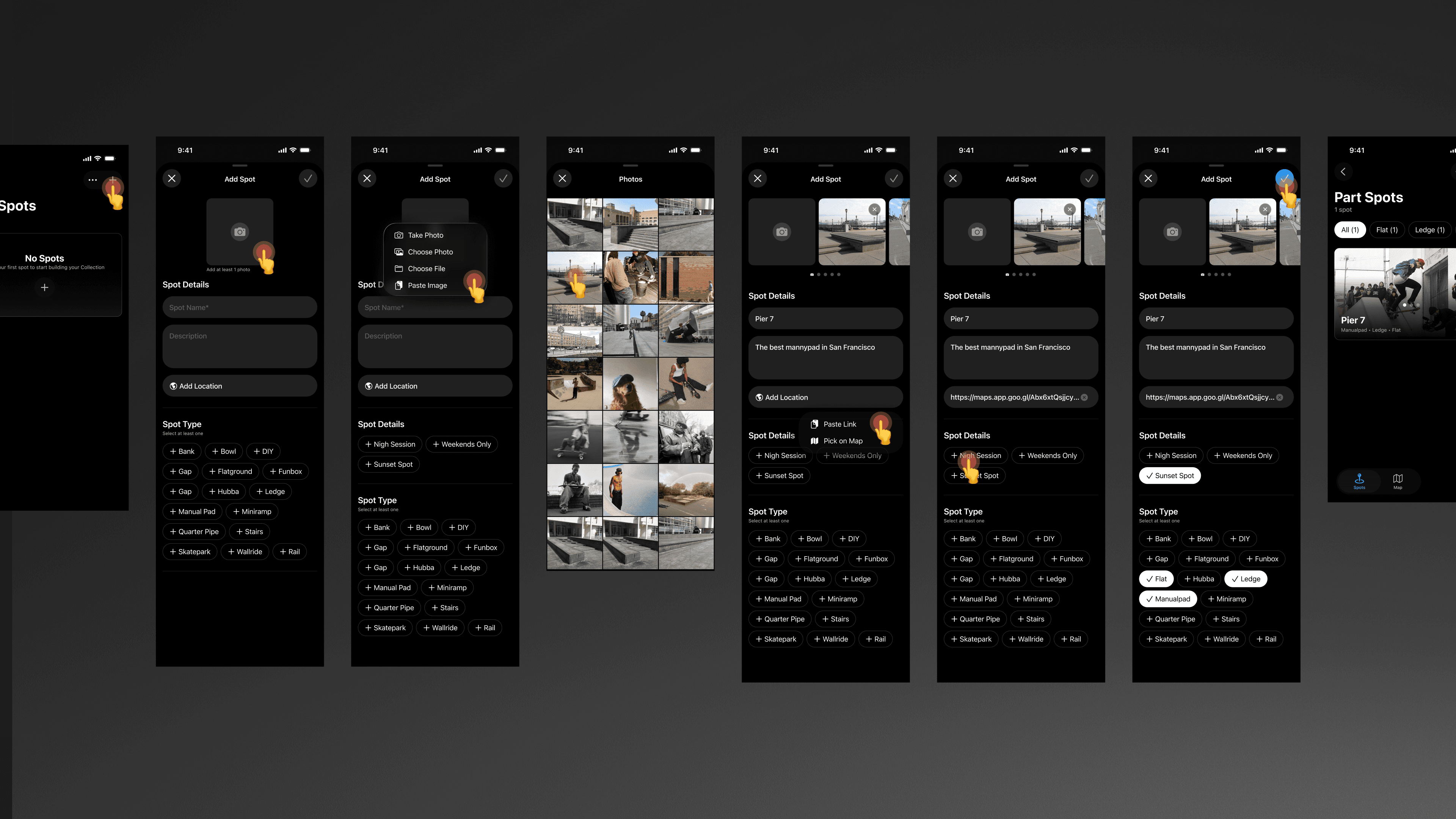
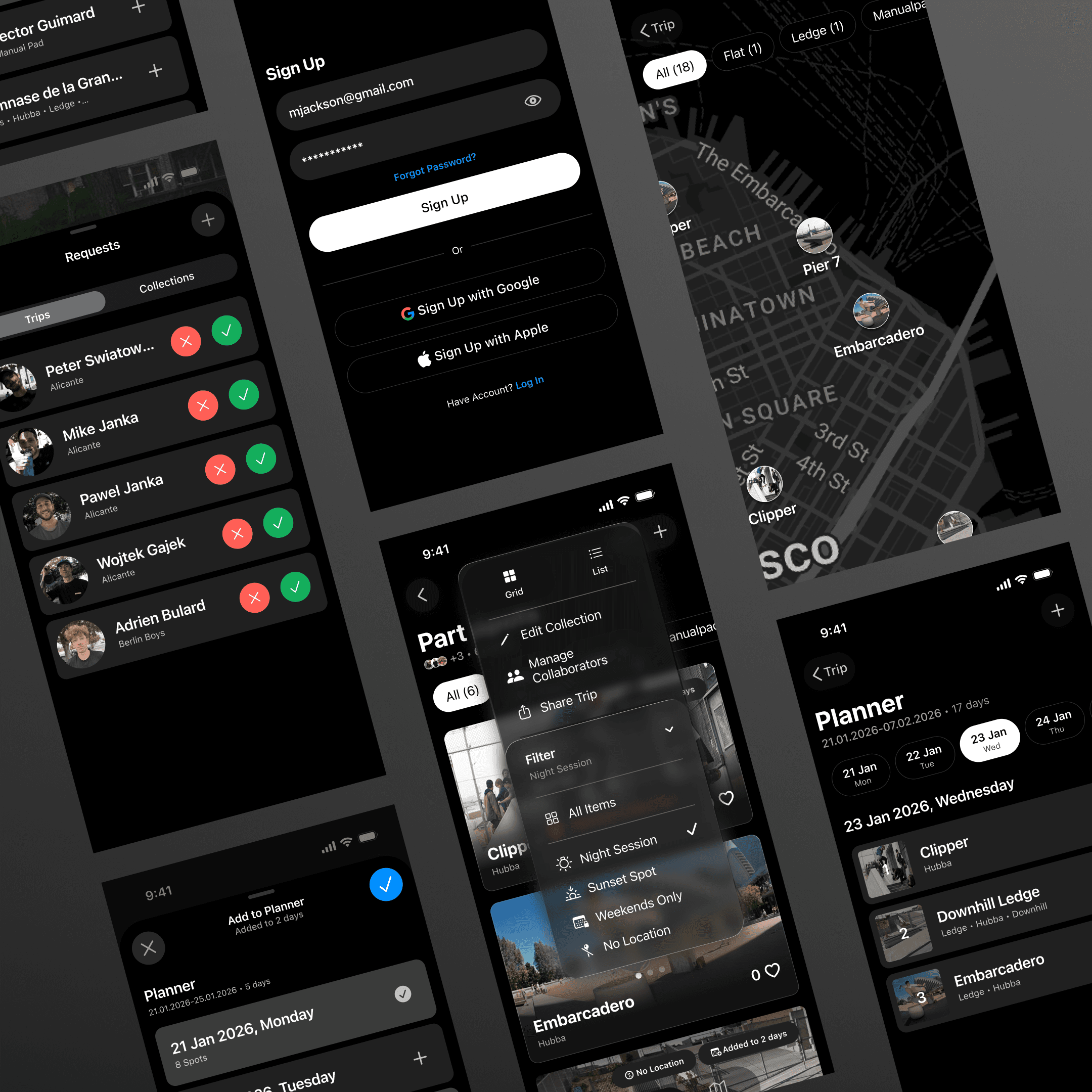
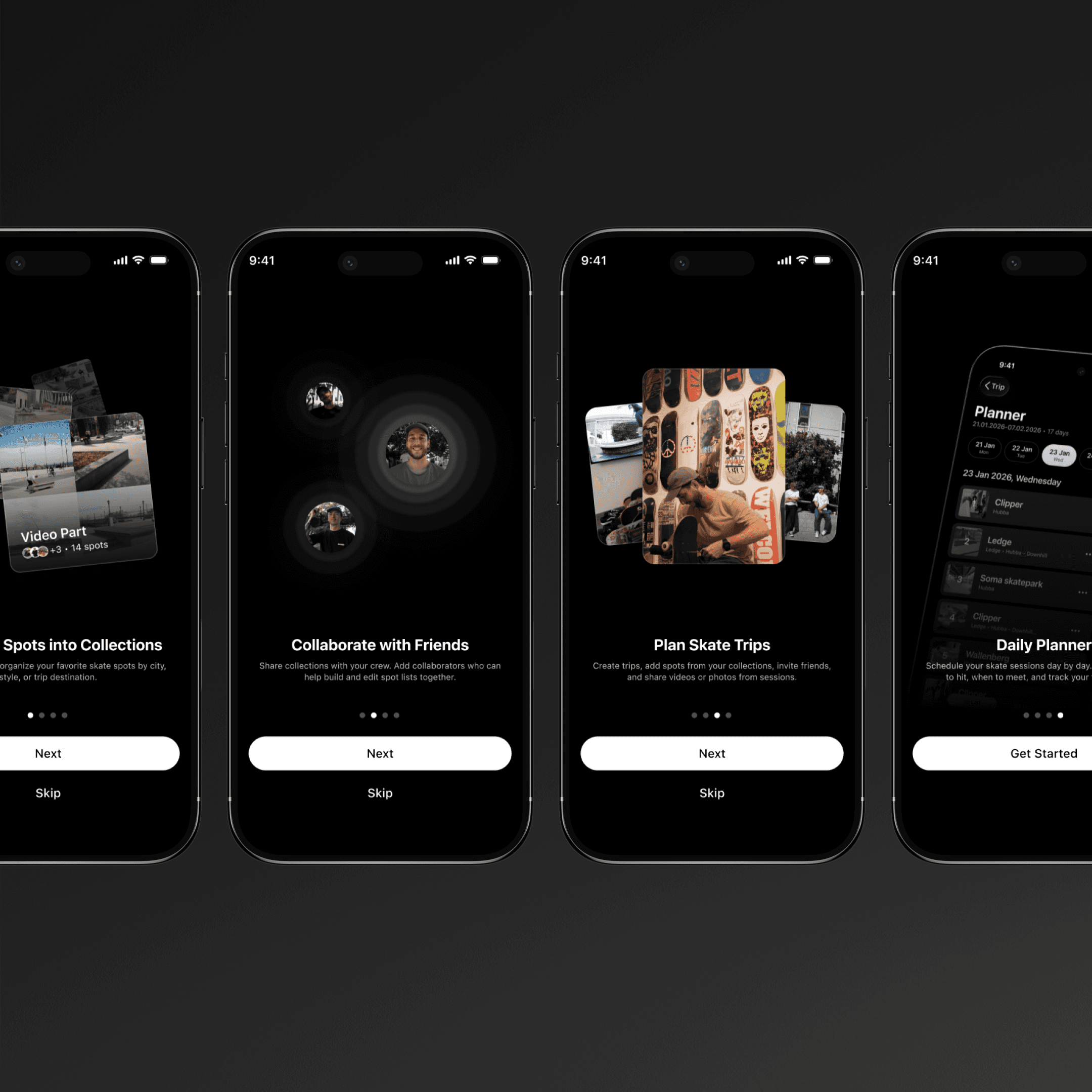
Collections - private spot libraries The core insight from research. Skaters can create collections organized by city, filming project, or any other criteria - and invite specific people to collaborate. Spots in a collection stay private by default. You decide who sees them and when. Collections can feed directly into trips - spots can be moved between collections and trip planners fluidly.
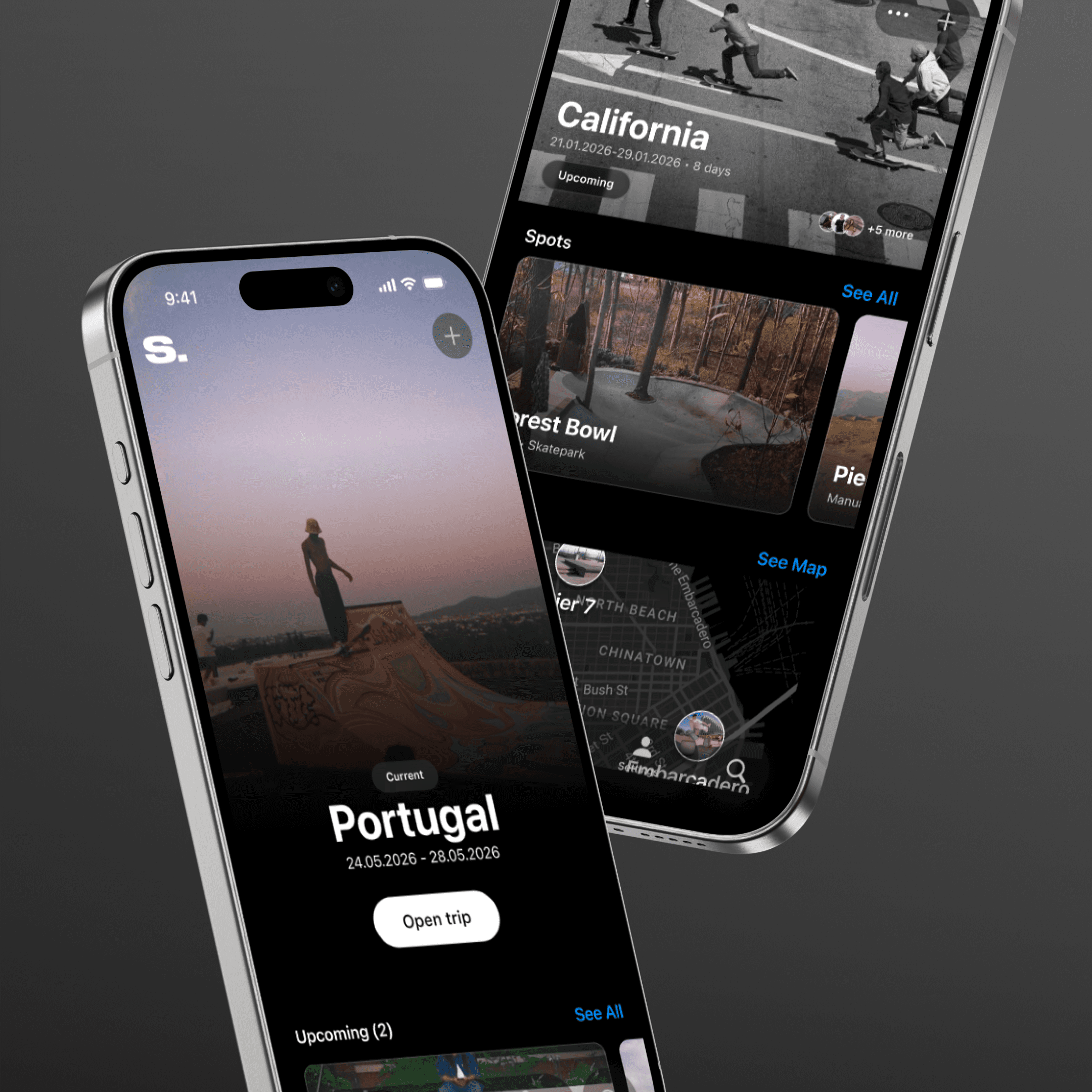
Trip planner A dedicated trip view where you plan day by day, assign spots to specific days, and keep all important information - transport, accommodation, links, notes - in one place. The dual view (list + map) lets you switch between seeing what you're hitting each day and checking how close the spots are to each other geographically.
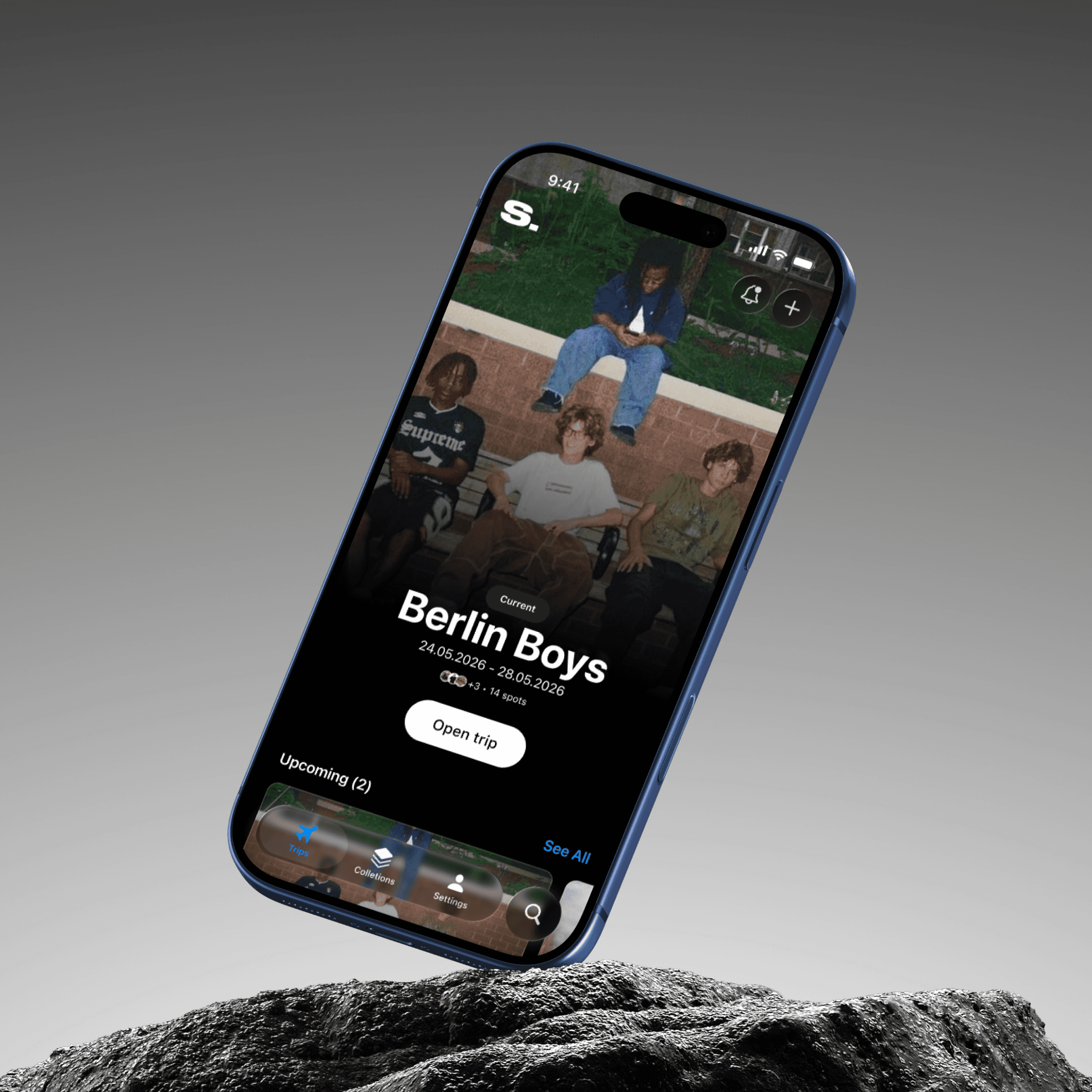
Joining a trip - two paths, one security layer Adding people to a trip had to be easy but controlled. Solution: invite link or manual trip code - both lead to the same outcome. The joining user sees a pending trip card with no details until the admin approves the request. Private by default, open only when you decide.
KEY CHALLENGES
1. The pivot from trips to spots The original assumption - that trip planning was the core feature - turned out to be wrong. Research revealed that spot management was the deeper need, and trips were one expression of it. Redesigning the information architecture around spots rather than trips changed the entire product direction mid-process.
2. Privacy as a feature Building a system where spots are private by default, selectively shareable, and moveable between collections and trips required careful thinking about permissions, ownership, and what happens when someone leaves a shared collection or trip.
3. Map with high spot density When multiple spots are close together, a standard map becomes unreadable. The planner solves this with a dual view - list of spots per day alongside a map showing geographic proximity. Skaters switch between logistics and geography depending on what they need.
4. iOS guidelines as a design constraint Building for App Store submission meant every interaction, navigation pattern, and component had to align with Apple's Human Interface Guidelines. This wasn't a limitation - it shaped the quality of the product and ensured the app felt genuinely native rather than a web app wrapped in a shell.
OUTCOME
MVP currently in active testing with real skaters
App Store submission prepared - screenshots, copy, and assets designed
The privacy-first approach to spot sharing resonated strongly during testing - multiple users specifically mentioned Collections as the feature that made the app feel different from anything currently available
Building as a skater, for skaters, meant zero time spent explaining the problem to stakeholders - every design decision came from lived experience validated by community research