BACKGROUND
In Arab corporate culture, executives at senior levels have meals delivered directly to their offices - dining in regular restaurants is not the norm. At this organization, all meal ordering was managed by secretaries who collected requests manually, coordinated with catering providers by phone and email, and relayed everything back and forth. The process was slow, error-prone, and carried real operational and health risks - on one occasion, an executive experienced food poisoning due to allergen information not being properly communicated to the catering provider. On the merchant side, company orders arrived mixed in with all other incoming requests - there was no dedicated channel, no structured data, and no way for the company to improve the service over time.
Client
ENTERPRISE CLIENT, UAE
scope
END-TO-END, RESEARCH, USER FLOWS, WIREFRAMES
Year
01.2025 - 04.2026
Role
UX/UI DESIGN
DISCOVERY
Direct access to executives wasn't possible, so I worked closely with a stakeholder who represented their needs throughout the project. I conducted market research into catering services in the Arab world and ran workshops with the team and merchants to map what value could be unlocked on both sides of the relationship.
Key questions we needed to answer before design could begin: Should secretaries remain the only ones placing orders, or should executives be able to order for themselves? How would the company get reliable, real-time order data from merchants? How would allergens and dietary preferences be enforced - not just collected? How would the company handle Ramadan, last-minute changes, and public holidays that follow moon sighting and therefore have no fixed date?
Key insight from merchant workshops: catering providers needed their own dedicated interface - not just an API integration. The result was a separate tablet application designed specifically for merchants, allowing them to manage all company orders in one place, separate from their other incoming requests. This emerged directly from the workshops and became a core part of the product scope.
These sessions also surfaced two features that weren't in the original brief: a guest ordering system allowing executives to order additional meals for visitors, and a structured feedback and rating system for merchants - both proposed during the design process and added to the scope based on workshop findings.
Problem Statement
Before the app existed, meal ordering relied entirely on phone calls and emails passing through at least three people - executive, secretary, and catering provider. Information got lost at every handoff: wrong orders, missed allergies, no tracking, no way to update preferences in real time. Catering providers had no structured channel for company orders and no visibility into feedback or nutritional requirements. There was no single source of truth for anyone involved.
"Every meal order passed through at least three people - executive, secretary, catering provider — and something always got lost along the way."
SOLUTION DIRECTION
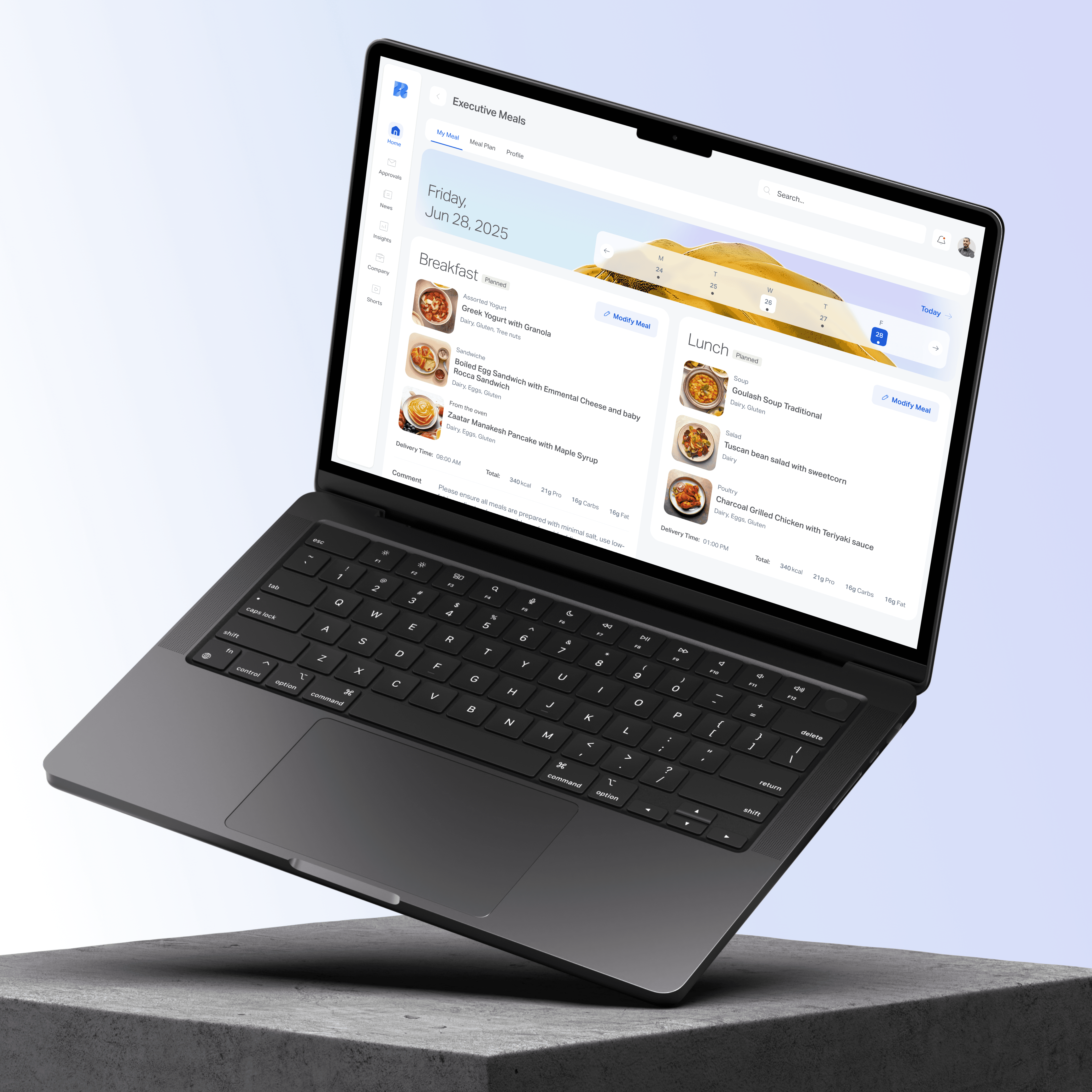
The company already operated a large internal platform used across the organization - embedding ExMeals within it meant no separate login, no onboarding friction, and immediate access for all employees from day one.
Four roles were defined, each with a distinct interface and set of responsibilities:
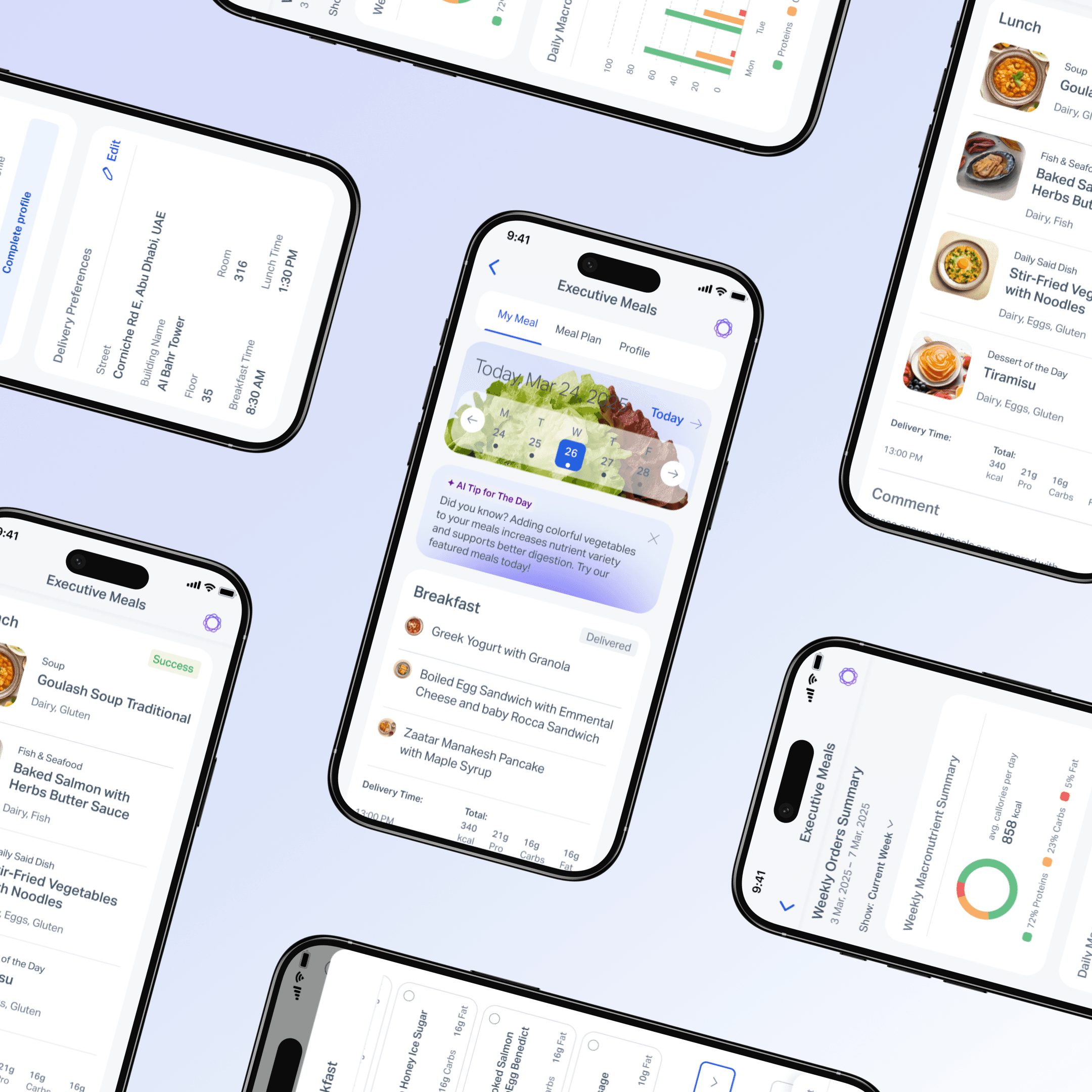
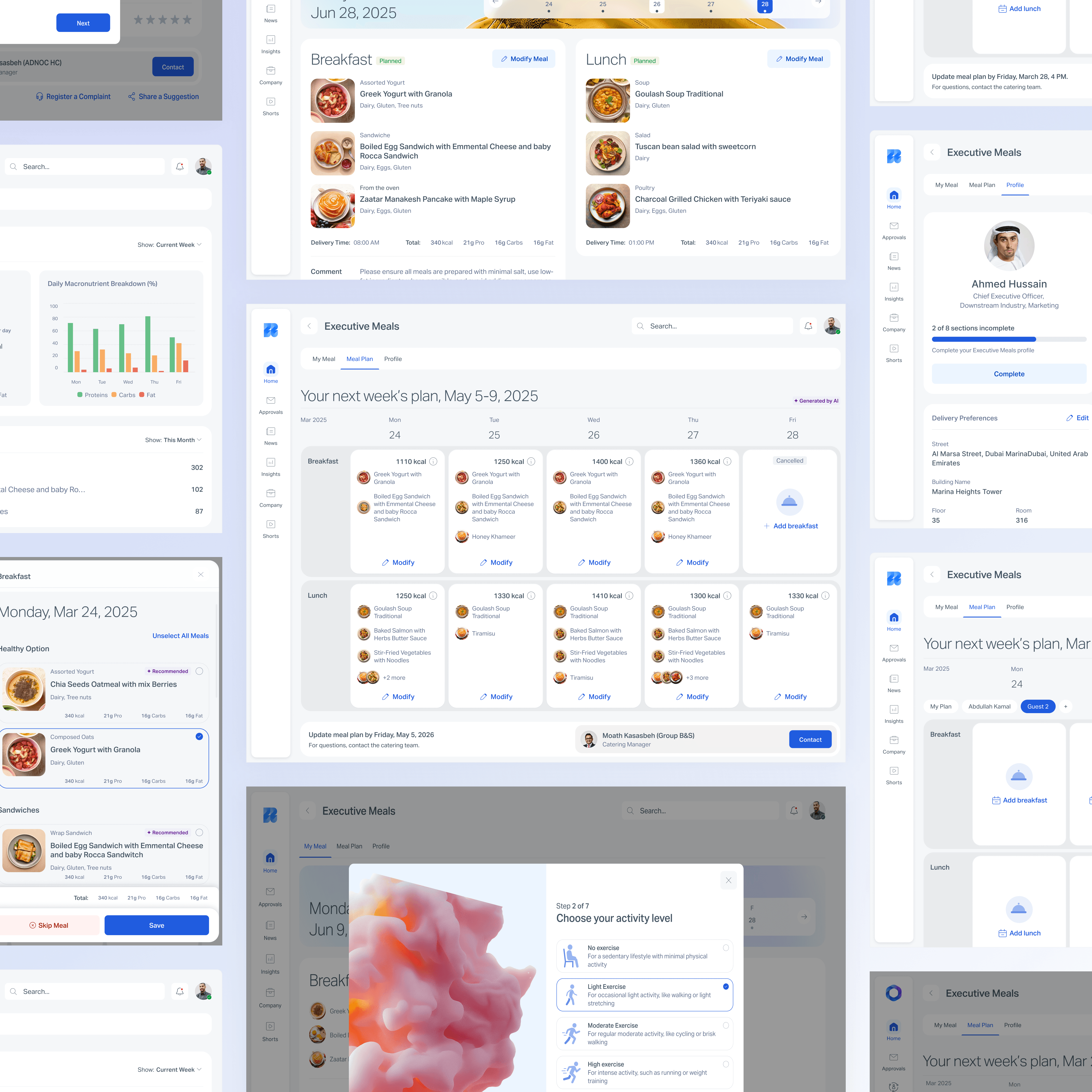
Executive - onboards with personal health data, orders daily meals, tracks nutrition, invites guests
Secretary - manages meals on behalf of the executive, plans weekly catering
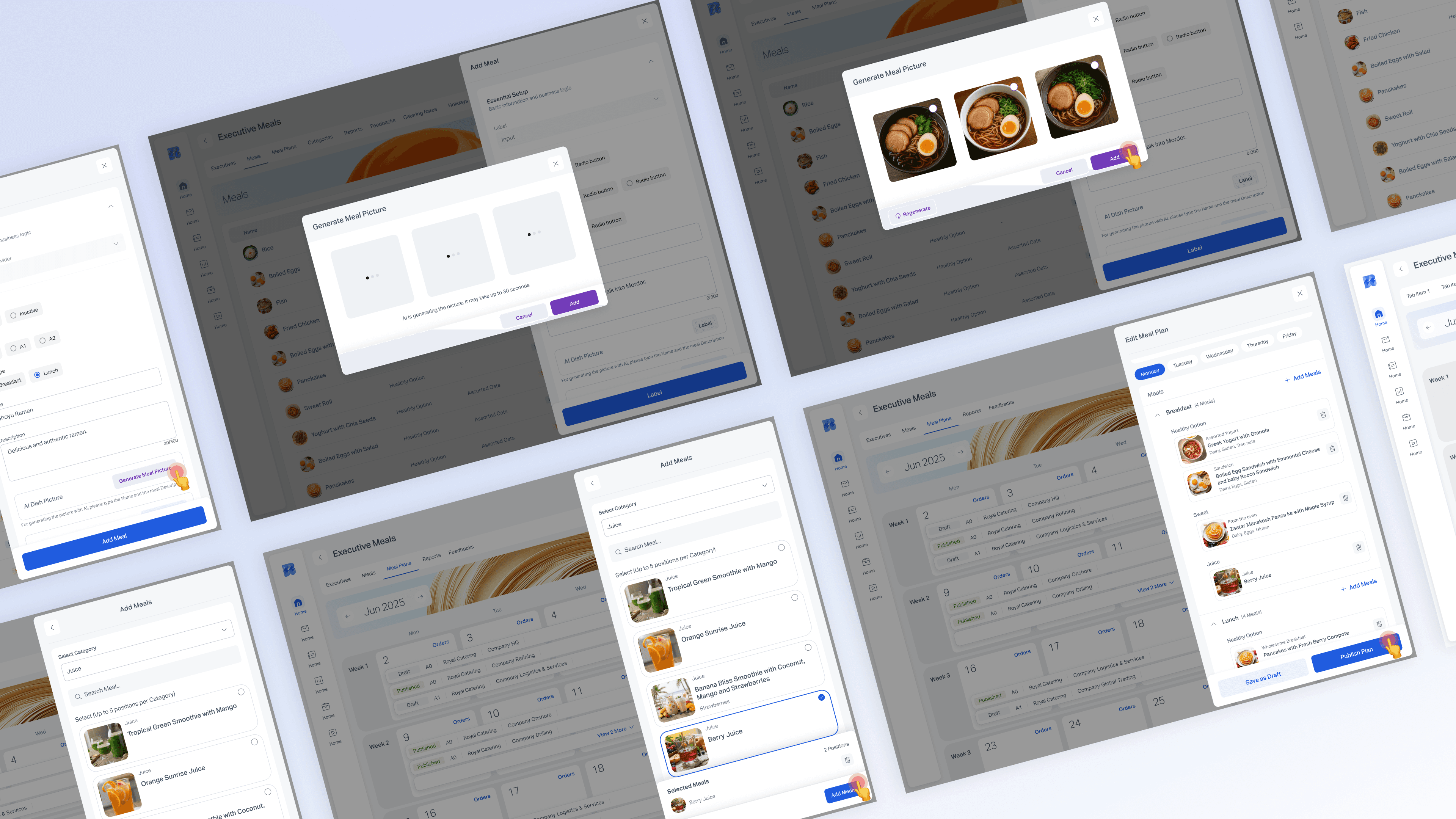
Admin - manages menus, meal plans, catering providers, rates, reports and feedback
System Admin - manages user roles and access across the platform
Merchant tablet application - a dedicated interface designed specifically for catering providers, pre-installed on tablets supplied by the company. All company orders arrive in one place, completely separate from other incoming orders, removing the risk of them getting lost or mishandled.
Allergen and dietary data collected during executive onboarding flows directly into every order - the restaurant always has the right information without anyone needing to communicate it manually.
Designing an enjoyable meal selection experience for executives was a deliberate strategic decision. If the interface is simple and appealing enough, executives will order for themselves - reducing the secretary's role as intermediary and eliminating the layer where most errors occurred.
AI-powered personalization - executives input their weight, height, lifestyle, health goals, and dietary preferences during onboarding. This data powers a recommendation layer that suggests suitable meals and tracks weekly macronutrient intake through visual dashboards. The system is live in production.
AI-generated meal photography - proposed by the design team. When adding a new dish, admins can generate a meal photo automatically using AI based on the dish description - eliminating the need for a photo library for every menu item.
Cultural and calendar considerations- during Ramadan, meal ordering is blocked entirely. For other public holidays - many of which follow moon sighting and have no fixed date - a dedicated holiday management panel was built, allowing admins to manually define and block specific dates as needed.
KEY CHALLENGES
1. Four roles, one product Each role has a completely different mental model. The design had to feel intuitive for an executive checking their lunch on mobile, and equally functional for an admin managing hundreds of meal entries in a data-heavy web dashboard - and for a merchant managing incoming orders on a tablet in a kitchen environment.
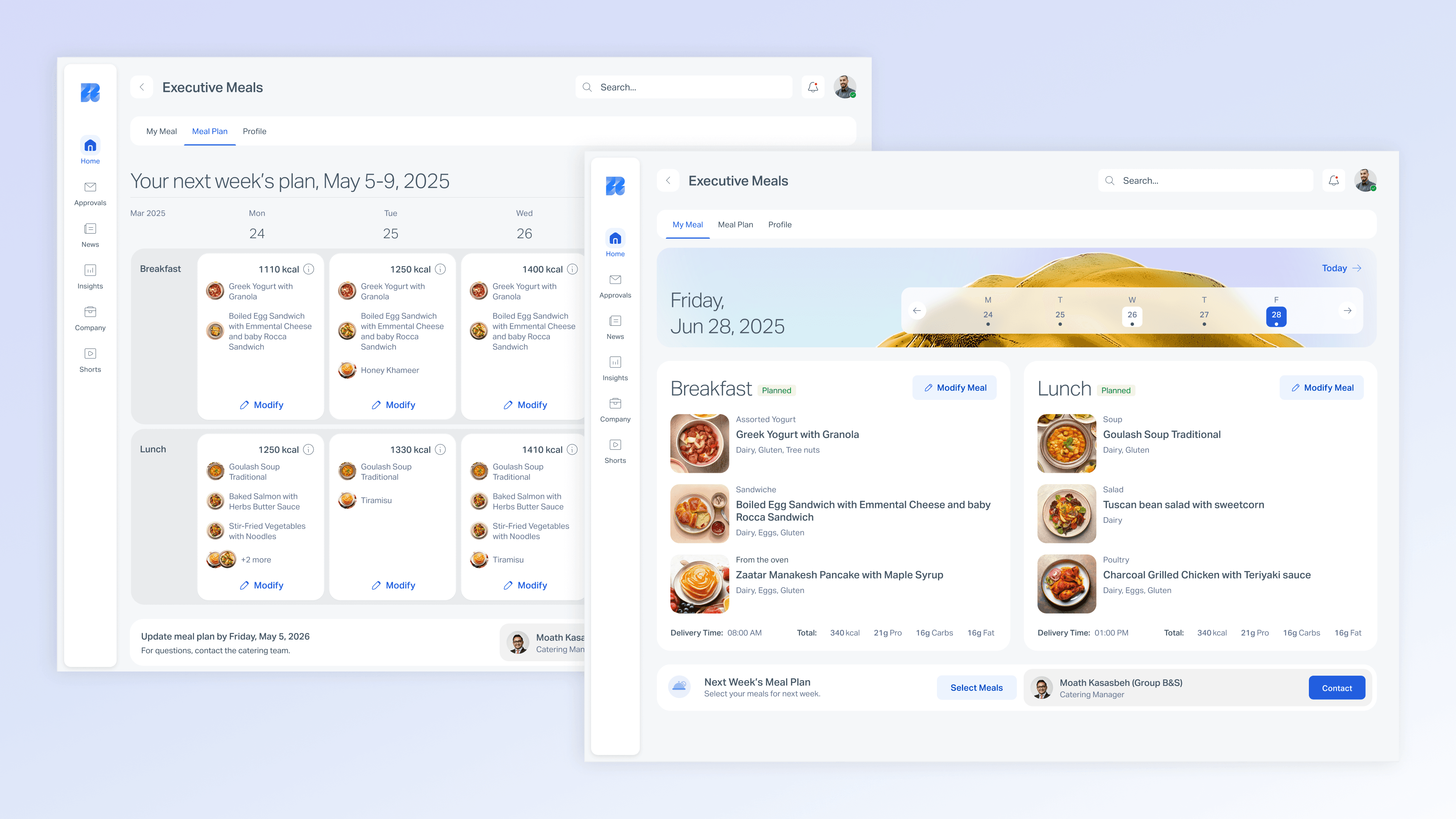
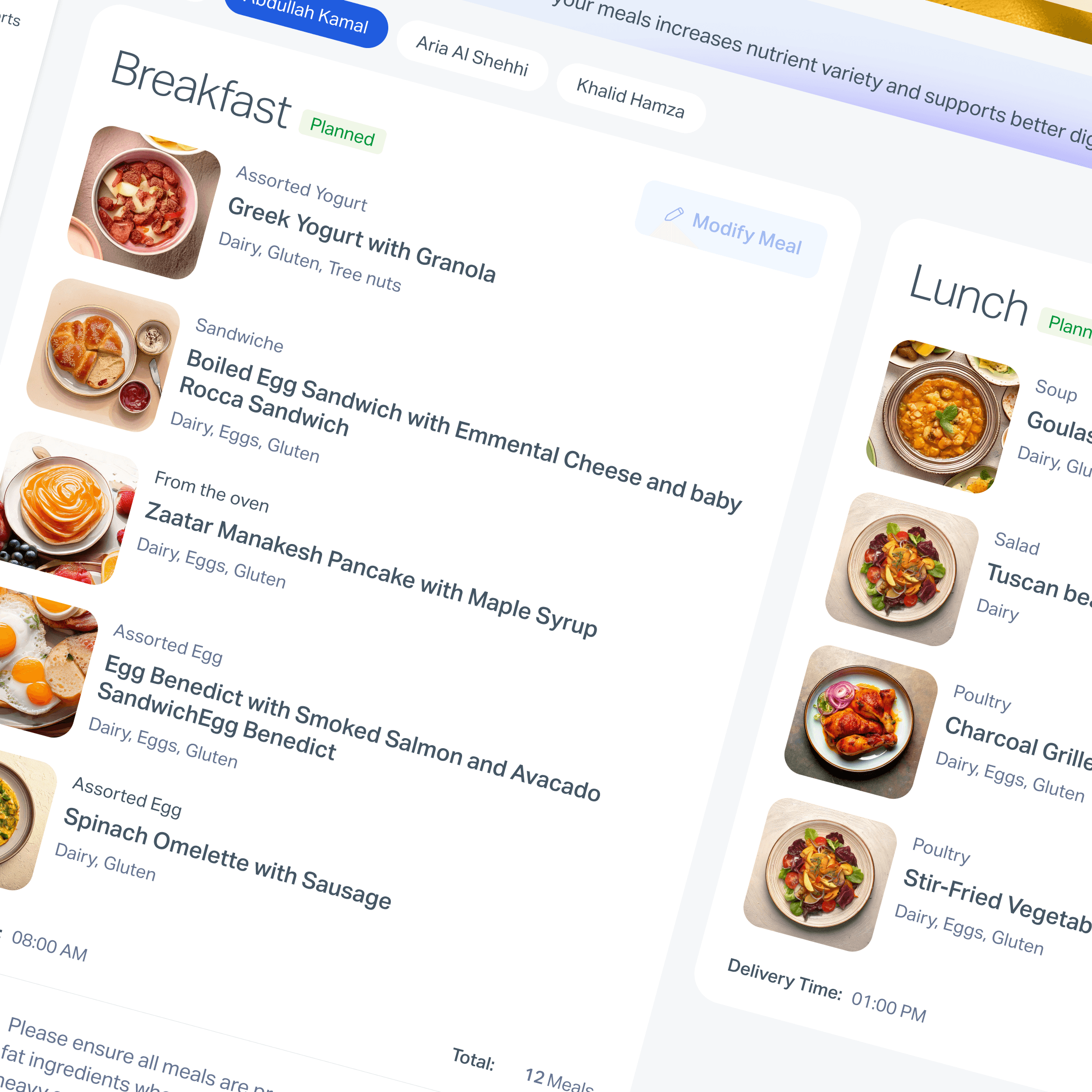
2. Meal planning complexity Executives can plan meals day by day or for an entire week - with separate breakfast and lunch slots, dietary filters, and the ability to order additional food for guests. The weekly planning view had to be simple enough for daily use but flexible enough to handle Ramadan, moon sighting holidays, and last-minute changes.
3. Personalization & nutrition Health data, allergies, and dietary goals collected at onboarding power both the AI recommendation layer and the automatic allergen communication to restaurants - turning a passive data collection step into active protection.
4. Admin dashboard depth The admin panel covers 8 functional areas - executives, meals, meal plans, categories, reports, feedback, catering rates, and holidays. Designing consistent navigation and data tables across all sections, while keeping the interface manageable, was a sustained design challenge across the full 8-month project.
OUTCOME
60% of executives now order their meals directly through the app - bypassing the secretary entirely (verified through in-app data)
Secretaries report significant reduction in workload - with the majority of executives ordering independently, secretaries now spend that time on other responsibilities rather than acting as a meal ordering intermediary
Order accuracy improved significantly - allergens and dietary preferences are stored in the user profile and communicated automatically to the restaurant with every order
Feedback loop established - for the first time, catering providers receive structured ratings and comments per order, enabling data-driven menu decisions